
 Written by
Daniel van Hek
Search Clicks·September 9, 2026
10 min read
Written by
Daniel van Hek
Search Clicks·September 9, 2026
10 min read
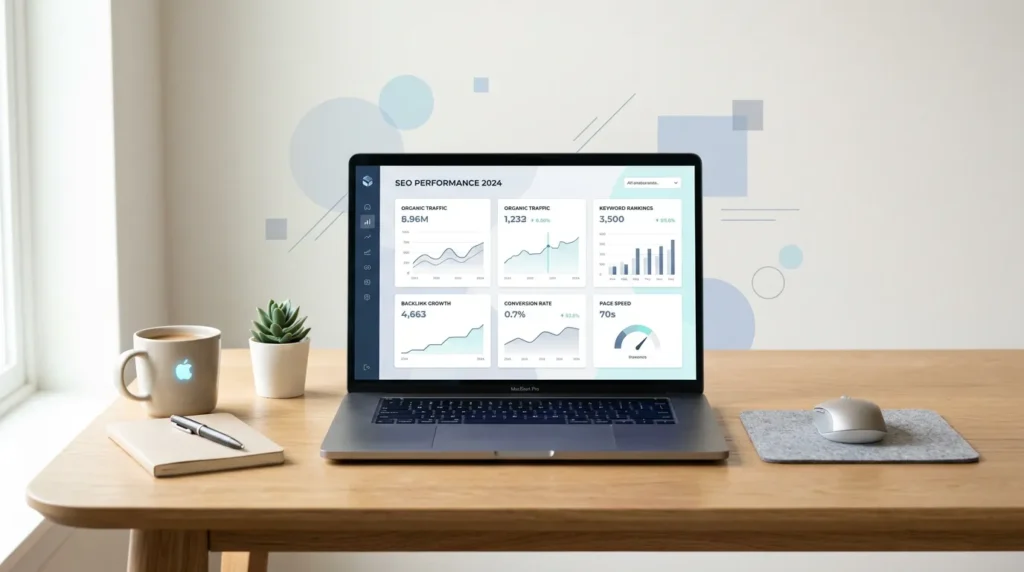
Just imagine for a moment that your website is a store. SEO (Search Engine Optimization) drives traffic that “keeps coming back”. SEA (Search Engine Advertising) drives traffic you can switch on today. A Google optimization agency is therefore not just about “rankings” or only about “ad accounts”. The right agency connects organic and paid around one commercial goal, and one measurable story about what works.
In this article, we walk you through the difference between SEO and SEA specialisation. Then we give you a practical way to assess what kind of support you need. Finally, we share a clear step-by-step plan so you don’t get lost in dashboards, reports, or technical jargon that nobody can use.
If you’re looking for a Google optimization agency, you often get two camps: the agency that mainly does SEO, and the agency that mainly does SEA. Both can work well. But it gets really interesting once you know what you need.
SEO is about lasting visibility in Google Search. That means: pages that are technically accessible, content that matches real search intent, and a site structure that makes sense for visitors and bots. Google explains in the Search Essentials that it’s about the factors that make your site eligible to appear in Google Search. (developers.google.com)
In practice, this works best when:
SEA is about paid visibility through Search Engine Advertising. You switch campaigns on, you manage bids and ads, and you measure conversions. SEA is the fastest route to capture demand when your offer matches what people are searching for right now.
In practice, SEA works especially well when:
Here’s the coffee-proof version: SEO and SEA feed each other. SEA shows you which search intent and value proposition resonate immediately. SEO makes those insights durable and cheaper per lead over the long term.
But be careful: this is not magic. The key is to connect both channels to the same measurement layer, the same definitions and the same funnel point. Without that, you get “reporting” instead of “direction”.
An agency only really earns your trust when you can see how it works. We look at execution, not marketing talk.
For SEO, GSC (Google Search Console) is often the foundation. There you can review indexing issues and also see how pages have been included in the index. Google explains that indexing is when Google finds a page (crawl), processes it and adds it to the index. (support.google.com)
For SEA, a solid conversion setup is crucial. Google explains how conversions are measured with the right tags and how you set up conversion tracking. (support.google.com)
The reality: if tracking is wrong, you’re optimising for “chance”, not “truth”. That’s why the first building block is always:
Many agencies do keywords. We usually go a step further: we connect search intent to a page format and a message.
For SEO, that often means:
For SEA, that often means:
Google uses E-E-A-T (Experience, Expertise, Authoritativeness, Trustworthiness) as a quality concept. Google Search Central calls “Helpful, reliable, people-first content” the core. (developers.google.com) And the blog about the update to the guidelines explains that an extra “E” for Experience was added. (developers.google.com)
Important: E-E-A-T is not a checklist you tick off. It is what people see and experience. In practice, for online marketing and sales optimisation, it means:
Dry truth with a wink: “we are experts” in a hero banner rarely helps. “We did this, this is how it worked, these were the choices” usually works better.
Let’s make it practical. Your choice depends on your goal, your timeline and your conversion maturity.
You usually choose SEO specialisation when:
Next step: we start with a short SEO audit and prioritise the pages that most logically contribute to conversions. After that, we build on topic focus, internal structure and content improvements.
You usually choose SEA specialisation when:
Next step: we set up campaigns with a strong ad-to-landing-page match. Then we optimise for conversions and lead quality, not just click behaviour.
Then the mix is often the smartest route. You use SEA to create momentum and SEO to make that momentum cheaper and more stable. But that only works if your tracking and conversion definitions are correct.
Next step: we create one measurement plan. Then we plan sprints in which SEO and SEA are optimised together around the same funnel steps.
You don’t want an agency that just “does work”. You want an agency that makes choices based on data and translates those choices into execution.
If we were setting this up ourselves as an agency, the first two weeks would usually look like this:
If you’re still at the stage of “which type of marketing agency suits us”, then this guide helps you choose with focus: Choosing a Marketing Agency: What to Look For.
Now for the point where many businesses get stuck. They optimise SEO and SEA as two separate projects. That can work, but it’s often inefficient. A Google optimization agency that works well organises it differently.
For lead generation, this means: what is your commercial action? Is it a request form? A contact request? An appointment? And what makes it an MQL or SQL, if you use those layers?
We recommend starting small. One core conversion and possibly one or two supporting events. No more, otherwise focus disappears and optimisation turns into guessing.
For SEO, we build pages around intent. For SEA, we make sure ads send traffic directly to those pages, or to variants with extra focus. That reduces friction. Visitors get what they expected faster, and Google sees consistency between promise and content.
As part of that, the technical foundation also matters. Google advises, for example, using sitemaps to help Google find pages, and also discusses how you can monitor indexing and sitemap status in Search Console. (support.google.com)
We always look at KPI’s (Key Performance Indicator) around conversion and lead quality. Think about:
Trade-off we’re honest about: sometimes a slightly higher CPA is acceptable if the SQL ratio rises. Your profit comes from sales effectiveness, not cheap clicks.
Instead of “we send a monthly report”, we work with short sprints. For example, two weeks per sprint with a test goal, a set of changes, and an evaluation.
That gives your team rhythm. And the agency can learn faster. No theatre. Just iteration.
A good Google optimization agency combines SEO and SEA not to have fun, but to achieve one commercial goal better. They start with measurement and conversion definitions. They translate search intent into pages and ads. They treat E-E-A-T as something you can see in your content and proof. (developers.google.com)
If you have to take one next step now, make it this: define your core conversion and your lead definitions, then check your SEO index status via Search Console and your SEA conversion tracking via the correct tag setup. (support.google.com)
After that, choose the right route. Only SEO if you’re building durability. Only SEA if you want to capture leads quickly. A mix if you’re looking for both momentum and scale. And yes, that is work. But it’s also exactly why you hire an agency, instead of just hoping that “it’ll get better on its own”.
Book a free strategy call and discover how many leads we can generate for your business. No obligations — just a concrete growth plan.
Book your free strategy call → Book your free strategy call — 30 min, no strings attached