
 Written by
Daniel van Hek
Search Clicks·October 24, 2026
10 min read
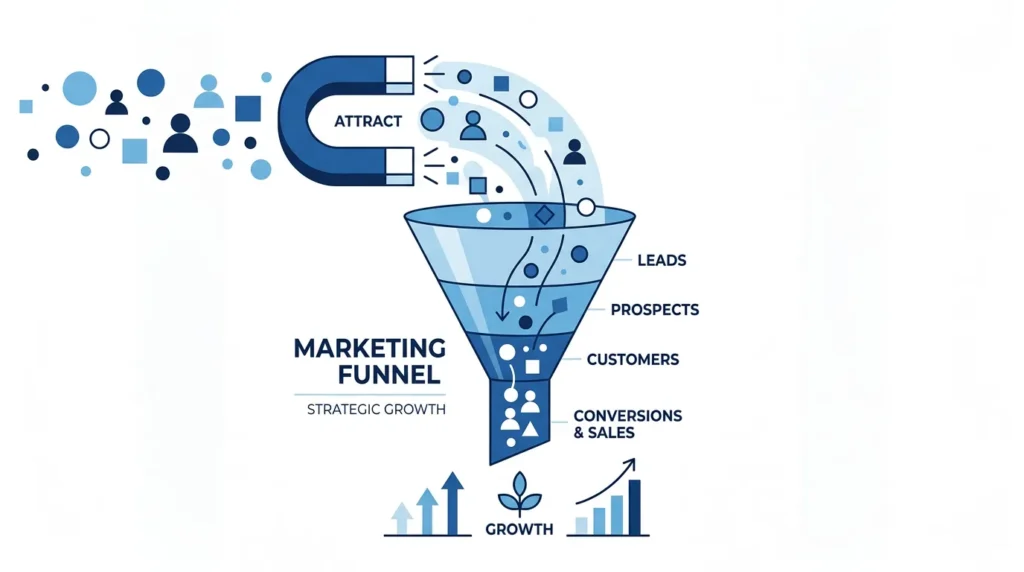
Okay, you want more leads. Not just more “contacts”. You want leads that fit, respond quickly, and move naturally toward an appointment or a sales opportunity. Sounds simple. It rarely is. But it’s also not mysterious.
In this article, I’ll give you 12 tactics that we keep seeing work in practice. We’ll keep it practical: what you do, why it works, what you measure, and what your next step is. We’ll stay focused on online marketing and online sales optimization, from SEO to SEA (Search Engine Advertising), from tracking to lead qualification. And yes, we’re also going to talk about conversions. Because if you have traffic, but no leads, you mainly have a lot of visitors, not many opportunities.
This sounds like a bureaucratic detour. But it’s the foundation of everything. If you count “lead” differently from your CRM, then you’re optimizing on the wrong signals. Then your dashboard becomes a kind of abstract art project.
We usually work with a simple set of definitions:
Google also describes this concept around “qualified leads” and “converted leads” within ad optimization, with the goal of helping you steer toward deeper funnel events. (support.google.com)
Next step: write down your definition of lead, MQL, and SQL on one page. Make sure your tracking defines the same thing as your CRM. Only then start optimizing.
Getting more leads is largely about measuring better. GA4 (Google Analytics 4) and Google Search Console give you insight, but only if you set conversions up correctly.
In GA4, a lead is often described as someone who shows interest and is likely to convert into a paying customer. (support.google.com) But in practice, you need to translate that into concrete events: what is the success moment on your site?
Also, in Google Search Console, basic metrics such as impressions and clicks are defined, and click-through rate is clicks divided by impressions. That helps you understand visibility and click behavior. (support.google.com)
Why this works: optimizing SEA and SEO on the right signals reduces noise. You pay less for “almost-leads” and get more traffic that moves toward a request.
Next step: choose 1 to 3 key events that reflect your lead quality (for example form submitted, quote requested, booking confirmed). Mark only what is truly a success as a key event. Test it with GA4 DebugView and then check in CRM whether it matches.
Many teams do this too late: they optimize the ad account, the keywords, the targeting, and only then the landing page. For more leads, sequence matters.
A good lead landing page does three things:
You don’t need to be flashy. You need conversion focus.
Practical improvements that often work quickly:
Whether you’re running SEO (Search Engine Optimization) or SEA, the landing page is the place where “interest” becomes a real request.
Next step: create a landing page variants matrix based on your main intents (for example price, implementation, demo, quote). Publish one variant per intent and connect ads or organic content directly to it.
“More traffic” is a bad steering signal for more leads. We want traffic that is already close to deciding.
So: work with search intent. In SEO, we see this in query clusters, and in SEA in ad copy, keyword intent, and landing page match.
Why this works: the closer the visitor is to buying behavior, the higher the chance of a real lead. Then your CPL (Cost Per Lead) often drops too, and your lead quality improves.
Next step: create three intent levels per channel:
Then align your content, your ads, and your landing page CTAs to each level.
More leads doesn’t mean you should let everything in. You want more usable leads.
We often do this with micro-qualification:
Google Ads describes the distinction between qualified leads and converted leads as a way to base optimization on deeper funnel steps. (support.google.com)
Next step: design a simple lead scoring model with 5 to 10 fields, and connect it to MQL and SQL status in your CRM. Keep it manageable, not complex.
Many SEA accounts optimize for “form submit” or “button click”. That sounds measurable. It’s often also the reason you get lots of leads that don’t fit.
You want to optimize for the success that sales values. That can be one step further, such as a quote request with all fields filled in, or a qualification event in your process.
Specifically: use your conversion definitions (lead, MQL, SQL) as the measurement base. Then measure lead quality offline in CRM, and import relevant offline conversions back where possible to optimize.
Next step: choose one SEA campaign that takes the most budget. Add a second conversion layer there (for example “qualified lead” or “appointment confirmed”). Let the campaign optimize for that, and compare results over the same period.
“We’re going to do CRO” is a plan without direction. CRO only becomes valuable when you formulate hypotheses that directly lead to more leads.
Use this format:
Note: KPIs must lead to leads, not just clicks. Clicks are useful for diagnosis. But leads are your end product.
Next step: choose 3 CRO tests for the landing page. Start with the fastest impact, such as form length and CTA text, and only then test copy details.
SEO grows more slowly, but it can make your lead machine more stable. The smart move is: you don’t just write for rankings, you write for intent.
We often focus on:
For a complete SEO measurement and growth framework, you can also use this guide: SEO: Complete Guide to Search Engine Optimization.
Next step: map your top landing pages to search intent. Make sure each page has a clear CTA that fits TOFU, MOFU or BOFU (Top, Middle, and Bottom of the Funnel).
More leads often also means: following up faster and more consistently. If your follow-up is slow, your lead quality drops. Then you may win volume, but you lose revenue.
Work with a short nurture flow:
No spam. Just guidance.
Next step: write 3 follow-up emails that each remove one barrier. Connect them to lead categories from your qualification.
Automation is not a buzzword here. It is simply software that handles repetitive steps so you can respond faster and lose fewer leads.
What often works well:
Important limitation: don’t let automated systems make budget changes or high-impact decisions without human approval. Automation should help you, not decide for you.
Next step: choose one bottleneck (for example time to first contact). Automate only that step first. Then measure impact on response time and lead quality.
If you only count how many leads come in, you miss the most important question: how many become SQL or customer?
That’s why marketing should report back at least once a month:
The crux is definitions. If you count “lead” differently in GA4 or ads than in CRM, you’ll be comparing apples and oranges. It’s not always tracking that fails. It’s often definitions and attribution.
Next step: create a simple matching rule, such as unique lead ID or exact form submission time. Use that to keep reporting consistent.
You can test hundreds of things. But then you’re testing chaos. We test with focus.
Workflow we often use:
That keeps the cause relatively clear. You see faster what really contributes to more leads of better quality.
Next step: choose one campaign or one page as a pilot. Define KPIs for lead volume and lead quality. Run a fixed test period, and document your lessons learned.
If you want to start tomorrow, use this rhythm.
No magic. Just focus. And focus is surprisingly often the difference between “busy” and “results”.
More leads is not just about more traffic. It’s about better signals, better intent, and better conversion into real requests.
If you take one thing away, take this: start with definitions and tracking. Then optimize your landing page for appointment behavior. Next, steer SEA and SEO by intent. And finally, make sure lead quality comes back into your marketing decisions.
Want to make it even more concrete? Choose one channel (SEO or SEA) and one funnel step (landing page or follow-up). Then we turn that step into your biggest lead lever. Because that’s often where the biggest gain is, without making your team learn to hate 3 new dashboards.
Book a free strategy call and discover how many leads we can generate for your business. No obligations — just a concrete growth plan.
Book your free strategy call → Book your free strategy call — 30 min, no strings attached