
 Written by
Daniel van Hek
Search Clicks·September 20, 2026
10 min read
Written by
Daniel van Hek
Search Clicks·September 20, 2026
10 min read
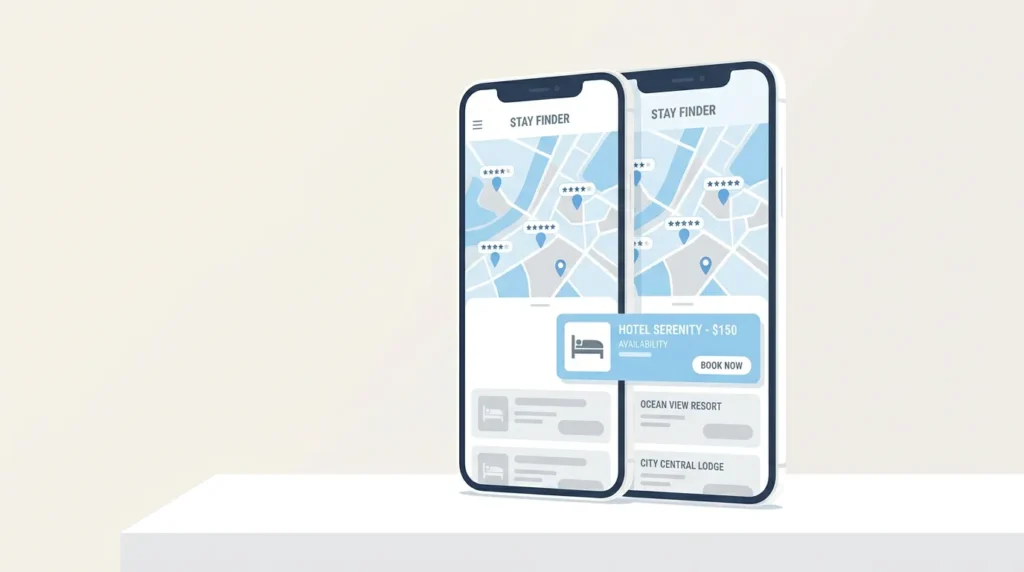
Imagine your hotel is ready. Your availability is up to date, your rates are correct, your site loads fast. And yet Google Ads feels like a gamble. Not because Google is “unreliable,” but because hotel campaigns only really work when everything is aligned: feed, campaign settings, landing page, conversion tracking, and budget control. That is exactly what google hotel ads is about.
In this article, we walk step by step through how to use Hotel Ads strategically and measurably, along with the surrounding travel formats such as Travel Promotion Ads and Performance Max for travel goals. You will get concrete setup choices, what to measure, what to watch in conversions, and what the next optimization step is after your first test period.
Hotel Ads are built specifically for accommodation advertisers. They connect your inventory and prices to travel-related search intent, and they use bidding strategies that take changing demand into account. Google itself explains that Hotel campaigns offer different bidding tools and that you can reach your target market without constantly adjusting bids manually. (support.google.com)
When does this work best?
An honest caveat: Hotel Ads are not “plug and play.” If your rate URL, session flow, or conversion measurement is off, your campaign will optimize toward the wrong signals. Then your budget can drain away while your management dashboard looks tidy. The campaign is doing exactly what it can, but based on poor input. That is not a marketing disaster; it is logistics.
Google offers multiple formats within the hotel ecosystem. The trick is placing them where they make commercial sense.
Hotel Ads are the core if you want to capture the intent “I want a hotel.” Your campaign settings, your inventory, and your landing flow all need to be right. For Travel Promotion Ads, Google explains where ads can appear, for example in the list of hotel results or in an overview of a hotel listing. (support.google.com)
Why does this matter for you? Because you need to adjust expectations per format. Some formats sit closer to the “I am choosing now” stage, while others support discovery or city intent.
Travel Promotion Ads can appear in relevant places within hotel searches or overviews. Google explains that these ads can be shown in hotel search results or in the “Overview” tab of a hotel listing. (support.google.com)
Practical guideline:
Performance Max for travel goals is built to advertise across multiple Google properties. Google explicitly says it automates campaign setup and serving, with ads in multiple formats across channels and Google properties. (blog.google)
Important: this is not a “free extra channel.” It is a scale engine, but only if your conversion tracking and goals are right. If your measurement is wrong, automation will head toward the wrong signals. That is the trade-off: more reach, but you give up more control.
If there is one thing you cannot skip, it is conversion tracking. Google explains that you need to set up conversions for Hotel Ads and Performance Max for travel goals, and that Google then uses booked hotel data to enable campaign performance tracking. (support.google.com)
What does that mean in practice for you?
Google also has specific information about commission-based bidding strategies. For example, with “commissions (per conversion),” cost per conversion is linked to a percentage of the booking value you set, with examples in the support documentation. (support.google.com) Details like this are not trivia. They determine how the bidding strategy signals your value.
You can switch Hotel Ads on. But to run them professionally, your budget and bidding strategy need to match your goal and your data.
Google gives guidance on bidding best practices and explicitly mentions that hotel campaigns offer tools for flexible billing and automatic targeting while demand changes quickly. (support.google.com)
From that, three practical actions follow that we often use in practice:
Google explains how Target ROAS works based on conversion values and conversion tracking data, including a forecast of future conversions and values based on reported conversion values. (googlesupport.serverhump.com)
What you should take from this:
Let’s make it practical. Your campaign is live. Your conversion tracking is on. Now you want to improve without drowning in reports.
Google explains that callouts for hotel campaigns can be created at account, campaign, and ad group level. (support.google.com)
A use case that often helps immediately:
Why does this work? Because hotel searchers are not just looking for a bed. They choose based on conditions and convenience. You reduce friction, and in hotels, friction is literally conversion.
This sounds simple. And yet in many accounts it is the real difference. If your landing page is not fast, or if the booking path breaks on mobile, then your campaign can be as smart as you like. You keep conversion artificially low, and bidding strategies get fewer signals.
What we do:
A budget campaign without a yardstick is a cash book without numbers. Use conversion value and your Cost Per Action (CPA) based on the correct definition for your goal (for hotel ads, this is usually “cost per booking” or “cost per conversion” based on your conversion goal). We prefer to avoid vague metrics here, because you want to manage what matters.
If you are looking for a clear approach to budget control around Search campaigns, this article fits well: Sea budget: how to keep your Search campaigns tightly controlled.
You do not want a “dashboard for show.” You want insight that leads to action. That is why we combine campaign data with conversion measurement and landing page signals.
And then, very important: do not treat a “website visit” as a “lead.” In lead generation, only a person or company with genuine commercial interest counts, and for hotels that is usually a booking action or an identifiable booking signal in your conversion tracking.
In audits, I see fairly recognizable patterns. Not because teams are unwilling. Usually because hotel setups have a few more dependencies than standard e-commerce.
Without correct conversion measurement, optimization becomes a guess. Google explicitly says you set up conversion measurement for hotel and Performance Max for travel goals, and that Google uses booked hotel data for performance tracking. (support.google.com)
If your conversion value is not stable, bid optimization cannot get a stable signal. Then you get fluctuations you cannot explain.
CTR or CPC means nothing without CVR and conversion value. Keep your KPI’s (Key Performance Indicator) close to the goal, otherwise you optimize the wrong thing.
If your conversion problem is broader than Google Ads alone, this piece about conversion and lead generation on websites helps: Lead generation website: optimization for conversion (brief).
Here is a test plan we often recommend because it is pragmatic and helps you learn without wrecking your account.
If you also want a broader view of the role of Search Engine Advertising in your funnel, this article can strengthen your thinking: Sea sem: from search intent to measurable leads with SEM.
Google Hotel Ads can work very well. But only if you do not see it as “set up the campaign and wait.” We treat it as a system: availability and inventory, messaging, landing route, conversion tracking, and budget control all need to form one whole.
If you take one thing away for tomorrow: fix measurement and the landing route first. Only then optimize bidding strategy and budget. That is the fastest path to calm in your reports, and calm in your team. And yes, your budget deserves that time.
If you want more depth on planning and lead generation around online marketing, these articles are a logical next step: More leads: 12 practical tactics in 2026 and, for organizing execution more broadly: Lead generation outsourcing: costs, benefits, and approach.
Or if your team has less time and you want to speed up execution, this framework fits: Lead generation agency: when outsourcing pays off.
Finally, if you want to see everything in one model from click to customer, this connects well: SEO SEA SEM explained: from click to customer. And if you are mainly looking at optimization around measurable leads, this is relevant: Sea optimization: from clicks to measurable leads.
Book a free strategy call and discover how many leads we can generate for your business. No obligations — just a concrete growth plan.
Book your free strategy call → Book your free strategy call — 30 min, no strings attached